
Islamic History
People Of Makkah
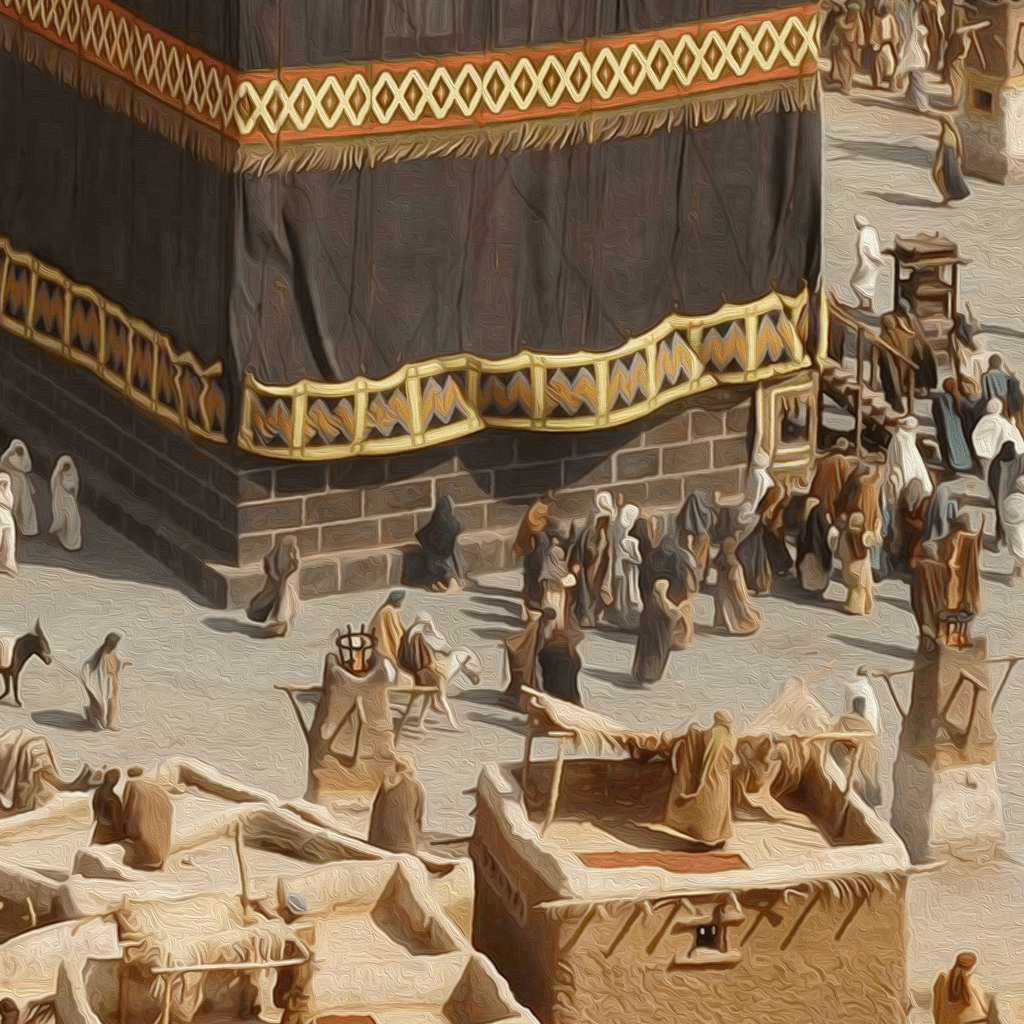


Long before Islam transformed Arabia, the people of Makkah lived in a thriving desert city known for trade, tribal loyalty, poetry, and the Kaaba. Their society was rich in tradition, yet many of their beliefs and customs had drifted away from the message of Prophet Ibrahim عليه السلام.
Meet the People of Makkah
Who lived in Makkah?
Introduce readers to the city’s inhabitants.
Explain that Makkah was home to many Arab tribes, but the most respected and influential was the Quraysh. Because they were custodians of the Kaaba, they held a special status among the Arabs.
You can include simple cards:
- Main Tribe: Quraysh
- Location: Makkah, Arabia
- Known For: Trade and caring for the Kaaba
- Language: Arabic
A City Built on Trade


Instead, its people earned their livelihood through:
- caravan trade
- buying and selling goods
- travel to Yemen and Syria
- hosting pilgrims visiting the Kaaba
Mention common trade goods such as spices, leather, perfumes, textiles, and incense.
Tribal Life
Family Meant Everything
Discuss:
- strong family bonds
- loyalty to one’s tribe
- tribal leaders
- protection through family
- honor and reputation
A visitor should understand that a person’s tribe shaped their identity and security.
Their Beliefs


Although many people believed Allah was the Creator, they also worshipped idols and sought help from them.
Explain that this practice had gradually replaced the pure monotheism taught by Prophet Ibrahim عليه السلام.
Mention that around 360 idols were placed in and around the Kaaba.
Daily Life in Makkah
Describe what a typical day might have looked like:
- merchants opening their shops
- camel caravans arriving
- pilgrims visiting the Kaaba
- families gathering
- children learning poetry
- tribal meetings in the marketplace
This helps visitors picture ancient Makkah rather than just read about it.
Their Good Qualities
Don’t present pre-Islamic Makkah as entirely negative. Many virtues were admired.
Highlight qualities such as:
- generosity to guests
- courage
- keeping promises
- hospitality
- eloquence and poetry
- pride in family and lineage
Explain that these values later found an even higher purpose through Islam.
Challenges in Society
Discuss practices that Islam later reformed, including:
- idol worship
- tribal conflicts
- social inequality
- injustice toward the weak
- exploitation of the poor
- limited rights for many women
Emphasize that while there were noble people, society also faced serious moral and social problems.
Why Makkah Was Chosen
Explain that Makkah’s position as a center of trade and pilgrimage meant people from across Arabia gathered there. When Prophet Muhammad ﷺ began preaching, the message could spread far beyond the city through travelers and merchants.
What Can We Learn?
- Makkah was a respected center of trade and pilgrimage.
- The Quraysh were honored as caretakers of the Kaaba.
- Society valued courage, hospitality, and eloquence.
- Over time, people moved away from the worship of one God.
- Islam preserved what was noble and reformed what was unjust.